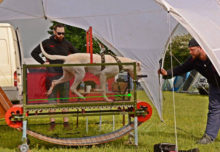

How to Start a Mobile Dog Gym: A Practical Guide for Dog Professionals
Starting a mobile dog gym is an exciting and fast-growing business opportunity. It allows you to bring professional conditioning, rehabilitation, and fitness services directly to your clients—saving them time while giving dogs a controlled, safe training environment.
Based on Firepaw’s experience working with mobile dog gyms across Europe, North America, and Australia, here are practical tips to help you start strong and avoid common mistakes.
1. Define Your Concept Clearly
Before buying equipment or a vehicle, decide what type of service you will offer:
- Conditioning & fitness for active dogs
- Weight loss programs
- Rehabilitation & low-impact exercise
- Sport / working dog conditioning
- General enrichment for pet dogs
Your concept will influence:
- The type of treadmill you need (slatmill vs carpet mill)
- Session length and pricing
- Interior layout of your vehicle
2. Choose the Right Treadmill
Your treadmill is the heart of your mobile gym.
Key things to consider:
- Manual (non-motorized) treadmills are preferred for safety and control
- Joint protection is critical, especially for daily commercial use
- Durability matters more than speed or looks
- Noise level is important in residential areas
Many mobile gyms use:
- Slatmills (e.g. Firepaw Phoenix) for general conditioning
- High-resistance carpet mills (e.g. Firepaw Dragon) for short, intense workouts
Tip: One high-quality treadmill is better than two lower-grade units.
3. Vehicle Setup & Space Planning
A mobile dog gym usually operates in a van or small truck, so space matters.
Practical setup tips:
- Use non-slip flooring
- Add noise-absorbing materials to walls and ceiling
- Secure the treadmill firmly to prevent movement
- Ensure good ventilation and temperature control
- Keep dogs separated for safety and focus
Always plan enough space to move around the treadmill comfortably.
4. Safety First (For Dogs & Humans)
Safety is non-negotiable.
Best practices:
- Always supervise dogs on the treadmill
- Start every session with a warm-up
- Use safety clips and leashes correctly
- Never force a dog to run
- Stop immediately if you notice stress or abnormal movement
Many professionals also ask owners to sign a disclaimer, confirming the dog is healthy enough for exercise.
5. Start Slow With Training Sessions
Not all dogs are athletes.
General guidelines:
- Short sessions at the beginning (5–10 minutes)
- Minimal resistance for new dogs
- Gradual progression over multiple sessions
- Focus on confidence, not speed
A calm, positive first experience determines whether the dog will enjoy future sessions.
6. Pricing & Scheduling
Mobile dog gyms offer convenience—and that has value.
Tips:
- Price per session, not per minute
- Offer packages (5 / 10 / monthly sessions)
- Allow buffer time between clients
- Don’t overbook—fatigue leads to mistakes
Consistency and quality matter more than volume.
7. Marketing & Local Awareness
Your biggest advantage is being local and visible.
Effective marketing ideas:
- Share videos of real dogs training (with owner permission)
- Target your local area on social media
- Collaborate with vets, trainers, and shelters
- Educate your audience, don’t just sell
Tip: Show results and process—not just equipment.
8. Think Long-Term
A mobile dog gym is a marathon, not a sprint.
Invest in:
- Equipment that lasts
- Ongoing education
- Strong client relationships
- Clear communication and expectations
Many successful mobile gyms started small and grew organically.
Final Thoughts
A mobile dog gym can be a rewarding business—financially and personally—when done right. Focus on dog welfare, professionalism, and consistency, and the rest will follow.
Firepaw is proud to support mobile dog gyms worldwide with professional-grade equipment designed for daily use.
If you’re considering starting your own mobile dog gym and need guidance on equipment or setup, we’re always happy to help.