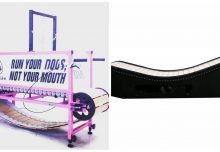

Mechanical vs. Electric Dog Treadmills: Which Is Better for Your Dog?
Dog treadmills have become increasingly popular among pet owners, professional trainers, working-dog handlers, canine athletes, rehabilitation specialists, and conditioning centers.
But one fundamental question remains:
Mechanical or electric treadmill—which is the better choice for a dog?
The answer depends on the dog, the purpose of the training, and the experience of the person using the equipment.
At Firepaw, we specialize in mechanical dog treadmills, particularly slatmills. However, our opinion is not based simply on the fact that this is what we manufacture. We also have direct experience developing electric treadmill technology.
And that experience helped us understand just how different these two training concepts really are.
Our Experience with Electric Treadmills
Several years ago, Firepaw was selected to develop a specialized electric treadmill for an advanced artificial-intelligence research project at the University of Illinois.
This was far from a conventional dog treadmill.
We designed and manufactured a large electric treadmill with a running surface of approximately 3 × 1.5 meters and multiple operating programs. It was developed to support research involving robotic locomotion and movement learning.
The project gave our team valuable experience with motorized treadmill systems, speed control, programming, structural design, and the specific challenges associated with electric treadmills.
Electric treadmills absolutely have their place.
But when the objective changes from controlling a machine to developing the physical potential of a real dog, the advantages of a properly designed mechanical treadmill become very significant.
The Fundamental Difference: Who Controls the Movement?
This is perhaps the most important distinction between the two systems.
On an electric treadmill, the machine moves the belt.
The dog has to adapt to the speed selected by the handler.
On a mechanical treadmill, the dog moves the belt.
The treadmill responds to the dog.
This may sound like a small technical difference, but from a conditioning perspective it changes almost everything.
A dog using a mechanical treadmill can:
- accelerate naturally;
- slow down naturally;
- transition between walking, trotting, running and sprinting;
- stop almost immediately;
- vary intensity from moment to moment;
- respond naturally to motivation and fatigue.
Instead of continuously adapting to a predetermined belt speed, the dog determines how much effort it wants to produce.
For general exercise this is useful.
For serious canine conditioning, it is one of the main reasons professionals choose mechanical treadmills.
1. Mechanical Treadmills Allow the Dog to Work at Its Own Pace
Dogs are not machines.
Their speed naturally changes throughout a training session depending on motivation, fatigue, temperature, physical condition and many other factors.
A mechanical treadmill accommodates those changes automatically.
If the dog wants to accelerate, the treadmill accelerates.
If the dog reduces effort, the treadmill slows down.
If the dog stops, the treadmill stops.
There is no need for the handler to continuously increase and decrease a speed setting to follow the dog’s movement.
This creates a very different relationship between the animal and the equipment:
the treadmill follows the dog instead of the dog following the treadmill.
2. A Major Advantage for Working and Sporting Dogs
For an average family dog, moderate daily exercise may be the only objective.
Working and sporting dogs are different.
Police and military dogs, protection dogs, hunting dogs and dogs participating in athletic competitions may need to develop several physical qualities simultaneously:
endurance, acceleration, power, coordination, cardiovascular capacity and the ability to recover between intense efforts.
This is where a mechanical treadmill becomes an extremely versatile conditioning tool.
A professional handler can use the same treadmill for:
- low-intensity warm-ups;
- steady endurance work;
- progressive acceleration;
- interval training;
- short high-intensity efforts;
- sprint work;
- resistance-based conditioning;
- controlled cool-down sessions.
The dog is not limited by the maximum programmed speed of an electric motor.
More importantly, the dog can move between different intensities naturally.
For athletes, that matters.
3. Mechanical Treadmills Allow Dogs to Reach Their Own Maximum Speed
This is one of the biggest differences for performance training.
An electric treadmill always has a maximum belt speed determined by its motor, controller and software.
A mechanical slatmill does not impose the same type of artificial speed ceiling.
A well-conditioned dog can accelerate according to its own ability.
That makes mechanical treadmills particularly valuable when the objective is not simply to “exercise the dog” but to explore and develop its athletic potential.
This is also why slatmills have become closely associated with canine treadmill competitions and performance conditioning.
The dog—not the machine—determines the performance.
4. Natural Acceleration and Deceleration
Maximum speed is only part of athletic performance.
How the dog reaches that speed is equally important.
Dogs rarely move outdoors at one perfectly constant velocity. They accelerate, decelerate and repeatedly adjust their effort.
A mechanical treadmill allows these transitions to happen continuously.
A dog can move from a relaxed trot into a faster run, accelerate strongly for several seconds and then naturally reduce its pace.
This creates opportunities for interval-based conditioning that are difficult to reproduce in exactly the same way on a conventional motor-driven treadmill.
For professional conditioning, this ability to work through changing levels of intensity can be extremely valuable.
5. The Dog Produces the Movement
There is another important mechanical difference.
On an electric treadmill, energy from the motor moves the belt underneath the dog.
On a mechanical treadmill, the dog’s own movement creates the belt movement.
The dog therefore has to overcome the inertia and rolling resistance of the system.
How much resistance is desirable depends heavily on treadmill design and on the training objective.
A very free-spinning slatmill can be designed for speed and endurance work.
A higher-resistance system, such as a carpet treadmill, can be used when greater muscular effort is desired.
This gives professional trainers different tools for different conditioning objectives rather than treating every treadmill workout as the same type of exercise.
6. Better Control Does Not Necessarily Mean Controlling the Speed
Electric treadmills are sometimes described as providing “more control” because the handler selects the speed.
That is true—but it is only one definition of control.
For professional conditioning, control can also mean:
- controlling session duration;
- controlling resistance;
- controlling rest intervals;
- observing the dog’s voluntary speed;
- monitoring distance;
- measuring acceleration;
- comparing performance between sessions;
- stopping the exercise based on the dog’s response.
A mechanical treadmill transfers control of pace to the dog while leaving control of the training protocol with the handler.
For experienced professionals, this can be a very powerful combination.
7. Safety Through Voluntary Speed Control
One of the strongest advantages of a mechanical treadmill is the dog’s ability to reduce its own speed.
If a dog becomes tired, uncomfortable or distracted, it can slow down.
If it stops producing movement, the treadmill decelerates and stops.
On an electric treadmill, the belt continues moving at the selected speed until the handler changes the setting or stops the machine.
This does not make electric treadmills inherently unsafe. Properly used electric treadmills can be very safe.
But it does mean that the handler has greater responsibility for continuously selecting an appropriate speed.
With a mechanical treadmill, the dog’s own behavior becomes part of the control system.
That can be particularly valuable during demanding conditioning sessions.
8. Professional Conditioning Is About More Than Making a Dog Tired
A treadmill should never simply be a machine for exhausting a dog.
Professional conditioning requires observing how the dog moves and responds to workload.
Experienced handlers pay attention to:
- gait;
- posture;
- breathing;
- willingness to work;
- acceleration;
- recovery;
- symmetry;
- fatigue;
- changes in performance over time.
A mechanical treadmill provides immediate feedback because every change in the dog’s effort affects the movement of the treadmill.
The trainer can see when the dog begins to accelerate, when performance drops and when the dog voluntarily reduces its effort.
Combined with speed and distance measurement, this makes the treadmill not only an exercise machine but also a useful conditioning and performance-monitoring tool.
9. Mechanical Treadmills Are Particularly Suitable for Interval Training
Many working and sporting activities do not involve 30 minutes of movement at exactly the same speed.
They involve changing intensity.
A dog may work hard for a short period, recover, accelerate again and repeat the cycle.
Mechanical treadmills are naturally suited to this type of training because there is no need to constantly change the motor speed.
For example, a professional session may combine:
warm-up → moderate running → acceleration → recovery → acceleration → recovery → cool-down.
The dog can make these transitions naturally while the trainer controls the structure and duration of the session.
10. Different Mechanical Treadmills Can Produce Different Training Effects
It is also important not to treat all mechanical treadmills as identical.
A low-resistance slatmill and a high-resistance carpet treadmill are very different conditioning tools.
Low-resistance slatmill
Better suited for:
- speed;
- endurance;
- cardiovascular conditioning;
- acceleration;
- longer running sessions;
- performance measurement.
Higher-resistance treadmill
Better suited for:
- strength-oriented conditioning;
- muscular workload;
- shorter, more demanding sessions;
- controlled resistance work.
This gives professional trainers the ability to select equipment according to the physical quality they want to develop.
11. Mechanical Systems Can Be Extremely Durable
Professional dog trainers may use a treadmill with many dogs every day.
That creates very different requirements from occasional home use.
A mechanical treadmill eliminates several components associated with motorized systems:
- electric motors;
- motor controllers;
- electronic speed regulation;
- wiring;
- control boards;
- displays required for motor operation.
A well-designed mechanical treadmill is therefore fundamentally simpler.
This simplicity can translate into excellent longevity and easier maintenance.
Individual mechanical components can also be replaced without replacing the entire machine.
At Firepaw, this modular philosophy has always been important. Our treadmills are designed so that wear components can be serviced or replaced individually, allowing the main structure to remain in use for many years.
For professional facilities, where downtime matters, this is an important consideration.
12. No Dependence on Electricity
This advantage is easy to overlook.
A mechanical treadmill requires no electrical connection to operate.
That makes it suitable for:
- mobile dog gyms;
- training vans;
- outdoor training areas where conditions permit;
- competition venues;
- kennels;
- temporary training facilities;
- locations without convenient access to electricity.
There is no motor that needs a high-current power supply and no cable restricting where the treadmill can be positioned.
For mobile professionals in particular, this can make installation considerably easier.
13. Greater Potential for Professional Customization
Professional dogs vary enormously.
A Jack Russell Terrier and a German Shepherd obviously should not train on equipment designed around identical dimensions.
The same applies to different training objectives.
Professional mechanical treadmills can be adapted through variables such as:
- running surface dimensions;
- treadmill width;
- dog-bar position;
- running resistance;
- belt material;
- braking systems;
- incline;
- measurement equipment.
This allows the treadmill to become part of a conditioning system rather than simply a generic exercise appliance.
So Are Electric Dog Treadmills Bad?
Absolutely not.
There are situations where an electric treadmill may actually be the more practical choice.
The important question is not:
“Which technology is universally better?”
It is:
“What are you trying to achieve with the dog?”
Electric treadmills offer one major advantage that should not be underestimated:
precise external control of speed.
The handler can select a very low speed and keep it constant regardless of how much the dog wants to accelerate.
That can be useful in certain situations.
When an Electric Treadmill May Be the Better Choice
An electric treadmill may make sense for:
Older dogs
Senior dogs may require slow, predictable exercise rather than high-performance conditioning.
Certain rehabilitation programs
When a veterinarian or canine rehabilitation professional requires a very specific walking speed, an electric treadmill can provide precise and repeatable speed control.
Rehabilitation should always follow appropriate veterinary or rehabilitation guidance, particularly after injury or surgery.
Dogs requiring tightly controlled low-intensity movement
Sometimes the objective is specifically to prevent the dog from accelerating.
In this situation, the fixed speed of an electric treadmill becomes an advantage rather than a limitation.
Less experienced owners
Some owners may initially find it easier to select a low speed and allow the dog to walk rather than learning how to motivate and manage a dog on a free-moving treadmill.
Dogs with limited training or handler communication
Mechanical treadmill training works best when the dog understands what is expected and has good communication with the handler.
Where that relationship has not yet been established, a carefully controlled electric treadmill may initially appear easier to manage.
Home Exercise and Professional Conditioning Are Different Goals
This distinction is important.
If the objective is simply:
“I want my dog to walk for 20 minutes indoors at a controlled speed,”
an electric treadmill may perform that job perfectly well.
But if the objective is:
“I want to progressively develop this dog’s endurance, acceleration, speed and overall physical capacity while allowing the dog to regulate its own movement,”
a mechanical treadmill provides possibilities that a fixed-speed motorized system cannot reproduce in the same way.
This is why mechanical treadmills are so attractive to professional trainers, working-dog handlers, canine conditioning centers and competitive dog-sport enthusiasts.
A Mechanical Treadmill Still Requires a Good Trainer
There is one important point that should never be ignored.
A mechanical treadmill does not replace knowledge.
Giving the dog control over speed does not mean that unlimited exercise is automatically safe.
Duration, intensity, resistance, temperature, hydration, conditioning level, warm-up and recovery still matter.
More is not always better.
Professional conditioning means progressively developing the dog’s physical abilities while protecting its long-term health.
The treadmill is a tool.
The quality of the training still depends on the person using it.
Mechanical vs. Electric: Two Different Philosophies
Perhaps the simplest way to understand the difference is this:
An electric treadmill controls the dog’s speed.
A mechanical treadmill allows the dog’s effort to control the treadmill.
Neither concept is automatically correct for every dog.
For controlled walking, certain rehabilitation applications, senior dogs or owners who want predictable low-intensity exercise, electric treadmills can be excellent tools.
But when we move into the world of serious conditioning—working dogs, sporting dogs, competition dogs and healthy dogs expected to reach a high level of physical performance—the advantages of a mechanical system become increasingly important.
Natural acceleration.
Voluntary deceleration.
Self-selected speed.
Sprint capability.
Interval training.
Adjustable resistance.
No motor-imposed maximum speed.
Immediate response to the dog’s effort.
Simple, durable construction.
These characteristics explain why the mechanical treadmill has become much more than an alternative to the electric treadmill.
For many professionals, it is an entirely different category of training equipment.
The Firepaw Philosophy
At Firepaw, our goal has never been simply to make a treadmill spin as freely or as quickly as possible.
Our objective is to build equipment that allows dogs to develop their physical potential while placing control, safety and long-term conditioning at the center of the design.
This philosophy is reflected in the development of our mechanical systems, including features focused on joint protection, vibration reduction, braking, adjustability and different resistance levels for different training objectives.
We believe that the best conditioning equipment should work with the dog rather than against it.
The handler controls the training.
The dog controls its movement.
And the treadmill connects the two.
That is the fundamental advantage of a mechanical dog treadmill.
Until robotic dogs take over the world, we believe real dogs should still be allowed to do the running.